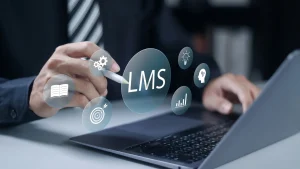









A library is no longer just a room filled with books. Modern educational institutions manage printed books, eBooks, journals, research papers, digital archives, and multimedia resources. As collections continue to grow, managing them manually becomes increasingly difficult. Registers, spreadsheets, and paper issue slips are time-consuming, error-prone, and provide little visibility into how library resources are being used. A Library Management System (LMS) solves these challenges by automating day-to-day operations while improving efficiency, accuracy, and user experience.
Key Takeaways
Automates cataloguing, circulation, inventory, and reporting.
Reduces manual work and improves record accuracy.
Supports both physical and digital library resources.
Provides analytics for better collection planning.
Integrates seamlessly with modern Education ERP platforms.
What Is a Library Management System?
A Library Management System is software that manages every core library activity including cataloguing, member registration, circulation, inventory, overdue tracking, reporting, and digital resources. It creates a centralized database that enables librarians to access information instantly and deliver better services to students and faculty. Unlike a Learning Management System, which manages online courses, a Library Management System focuses on organizing and managing library collections.
Why Educational Institutions Need One
Schools and colleges are undergoing rapid digital transformation. Admissions, attendance, examinations, and fee management are already digitized in many institutions. Libraries should be part of this transformation. A modern LMS ensures faster book searches, accurate inventory, automatic reminders, better reporting, and improved user satisfaction.
Real-World Example
Imagine a school with 2,500 students. During examination season, hundreds of books are borrowed every week. Using registers, librarians spend valuable time checking availability, calculating fines, and updating records. With an LMS, these tasks take only seconds through barcode or RFID scanning, allowing librarians to spend more time supporting learning instead of paperwork.
Core Modules
The most important modules include Book Catalogue, Member Management, Barcode and RFID Support, Circulation, Fine Management, Inventory Management, OPAC (Online Public Access Catalogue), Reports & Analytics, and Digital Resource Management. Together they provide complete visibility over library operations.
Benefits
An LMS improves operational efficiency, reduces paperwork, minimizes human error, provides instant search, automates overdue reminders, generates detailed reports, enhances student experience, supports accreditation requirements, and enables better utilization of library resources.
Manual Library vs Library Management System
Manual libraries rely on registers and paper records, making searching, reporting, and inventory verification difficult. A Library Management System offers instant search, automated circulation, digital records, analytics, and secure access from a centralized platform.
Cloud-Based vs Traditional Systems
Cloud-based LMS platforms offer lower infrastructure costs, remote accessibility, automatic updates, regular backups, and easier scalability. Traditional on-premise systems provide greater local control but require servers, maintenance, and dedicated IT support. Most educational institutions today benefit more from cloud deployment.
How to Choose the Right LMS
Choose software that supports barcode or RFID integration, mobile accessibility, OPAC, advanced reporting, role-based security, cloud deployment, and seamless integration with your Education ERP. Reliable vendor support and simple data migration are equally important.
Common Mistakes to Avoid
Many institutions focus only on price while ignoring scalability, reporting capabilities, ERP integration, security, and future requirements. Choosing software that cannot grow with your institution often results in higher long-term costs.
Future Trends
Artificial Intelligence, predictive analytics, QR codes, RFID automation, mobile apps, self-service kiosks, and hybrid digital libraries are shaping the future of library management. These technologies help institutions provide faster, smarter, and more personalized library services.
Conclusion
A modern Library Management System is an investment in efficiency, accuracy, and better learning experiences. It empowers librarians by automating repetitive work while giving students and faculty faster access to information. Institutions planning digital transformation should also consider integrating their library with a comprehensive Education ERP so admissions, attendance, examinations, and library records remain connected. Learn more at https://egenius.in/ and explore the School Management Software solution at https://egenius.in/products/school-management-system-software/.
Frequently Asked Questions
What is a Library Management System?
It is software that automates library operations including cataloguing, circulation, inventory, and reporting.
Who can use it?
Schools, colleges, universities, public libraries, and corporate libraries.
Can it manage eBooks?
Yes. Modern systems manage both physical and digital collections.
Does it integrate with ERP?
Yes. Most modern platforms integrate with Education ERP solutions for centralized data management.
Is cloud deployment secure?
Yes, provided the solution offers encryption, role-based access, backups, and audit trails.
Empower your institution with a modern Library Management System that’s seamlessly integrated into the eGenius Education ERP platform.
👉 Visit: https://egenius.in/